Showing posts with label Mozambique. Show all posts

Wednesday, April 30, 2008

Paraiba Tourmaline; The Controversy Goes on and on…:


GIA Weighs In:

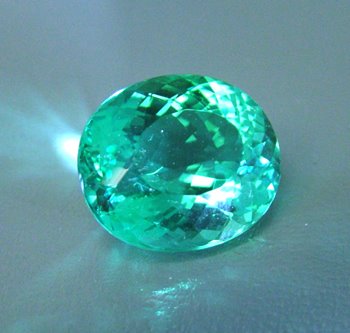
The Spring 2008 issue of GIA's Gems & Gemology features a full length article on Mozambique cuprian tourmaline. Under the heading “Nomenclature Issues” the authors, there are eight of them, four work for GIA, make the point that the now infamous Laboratory Manual Harmonization Committee (LMHC) has made it optional for its member to use the term Paraiba as either a variety designation or a trade name. The members of LMHC include AGTA, CISGEM, GAAJ, GIA, Gubelin and SSEF. Most members, they note, have opted to use Paraiba as a trade name. (Photo: above left: The real thing, 0.88 carat Paraiba Tourmaline from Paraiba, R. W. Wise collection)

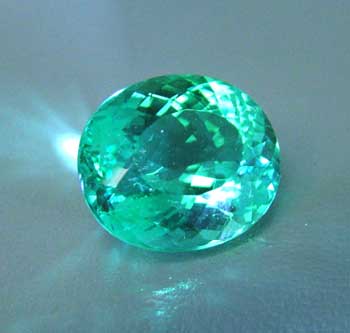
A new wrinkle has been added. According to LMHC Information Sheet no. 6, Paraíba Tourmaline is defined as “a blue electric blue, neon blue, violet blue) or green elbaite tourmaline of medium to high saturation. That the gems have the proper chemistry, be copper and magnesium bearing is not sufficient. Violet, reddish-purple and yellowish green gems are excluded by definition and, say the authors, “The saturation necessary for blue-to-green Cu (Copper) bearing tourmaline to be considered ‘Paraiba’ does not have widespread agreement.” (Photo: above right: Exceptionally fine pair of Mozambique cuprian "Paraiba" tourmaline)

This definition offers up all sorts of interesting possibilities in the ongoing certificate game. One lab may decide that a given stone has sufficient levels of saturation and is of the proper hue to be called Paraíba while another lab might simply call it “Cu- and Mn-bearing.” This creates a situation similar to the LMHA decision regarding pinkish-orangy sapphires. Depending upon saturation, the lab may decide the stone is or is not padparadscha. For years now labs have been making a distinction between emerald and green beryl on the basis of saturation. This means that getting a Paraiba certificate on may be something of a crap shoot.

Reductio ad absurdum:

The decision to define the hue/tone of Paraiba tourmaline might have another embarrassing if unintended consequence. Gems from the original Paraíba mine, some of which, particularly the unheated material, was definitely in the violet and reddish purple hues described above, will no longer fit the definition of Paraiba tourmaline while stones of the appropriate hues from Mozambique and Nigeria will. Oh what a tangled web we weave!

Not Quite Like Padparadascha:

In a recent article The Paraiba Predicament posted on the Colored Stone website www.colored-stone.com Editor in Chief David Federman draws a comparison between the current tourmaline terminology issue and a similar debate over the use of the term Padparadscha sapphire.

In the 1980s a large strike of fancy colored sapphire was found in the gem gravels of the Umba River in Tanzania. These included a portion of reddish-orangey-pink-brownish-red stones that were marketed as African Padparadascha. (Photo: left: 3.96 carat Natural Sri Lankan padparadscha sapphire, R. W. Wise, Collection) Many in the trade found this objectionable. In the 1983 article published in Gems & Gemology, legendary gemologist Robert Crowningshield defused the controversy by defining the color of padparadascha. This is correct. However, Federman goes on to say:

“Although "padparadscha" referred to color rather than place, it was always assumed that this corundum had one origin only: Sri Lanka. So use of the term "padparadscha" implied a single source.”

Federman’s analogy breaks down on a question of fact. Crowningshield did exclude Umba River stones from the definition not because they were from Africa but because, as he states in the referenced article, these gems were a brownish orange to deep orangy-red did not, therefore, fit the definition of padparadscha. Crowningshield did not exclude stones simply because they were not of Sri Lankan origin. The term padparadscha "implied" a single source only because, at that time there was but one source.

Since that article was published a number of natural stones from Vietnam and East Africa from newer sources have entered the market. These gems fit Crowningshield’s definition and qualify for the designation padparadscha despite lacking the traditional geographic lineage. Padparadscha as defined by Crowningshield as “light to medium tones of pinkish orange to orange-pink hue.” This is the same definition that I use in my book, Secrets Of The Gem Trade, and it has become universally accepted in the trade.

In his seminal Ruby & Sapphire, Richard Hughes appears to draw the same conclusion as Federman but goes on to say that “The best ‘padparadscha’ this author has seen was unearthed in Vietnam, not Sri Lanka.” He goes on to say that the best way to resolve the controversy would be to define the color range (p.398). Ironically, he suggests that a “set of printed color references” (ibid.). Two years ago, the LMHC came up with just such a set of color references which has generated its own set of problems. (see GemWise: Boldly Going...)

Well the best padparadscha this author has seen was found near Songea, Tanzania and who knows where the next one will come from. Actually a few stones from the old Umba River source also fit Crowningshield’s definition.

Just Do The Right Thing:

The fact is that none of the issues and absurdities associated with the current nomenclature would be issues at all if CIBJO and the labs had done it right in the first place. For the past fifty years every new gem that has come on the market has been named according to a simple convention. Though I am no fan of the ite word it has worked. Tanzanite, tsavorite, spessartite have done the job. With the new copper bearing Mozambique tourmaline a slight change is required. Since a mineral named cuprite already exists, cuprian as in cuprian elbaite tourmaline is the proper name.

We don't need lab gemologists to get into aesthetics or connoisseurship, areas for which they have not been trained. We don't need to exclude copper bearing stones from any source. We don't need another scandal. We don't need to confuse consumers. Try to explain the whole Pariaba thing and you will confuse buyers and confusing people is not a good way to market gemstones. We do need to knock of the BS.

Some say its too late, its a done deal, to that I say, nonsense! We all know that the naming of this gemstone is the result of a cynical and very well orchestrated attempt on the part of a group of dealers to hijack and build a marketing campaign on the good name of a very rare gemstone and we need to do it right.


Learn the truth about how tourmaline, padparadscha sapphire and other fine gems are graded and priced!

Follow me on gem buying adventures in the pearl farms of Tahiti. Visit the gem fields of Australia and Brazil. 120 carefully selected photographs showing examples of the highest quality gems to educate the eye, including the Rockefeller Sapphire and many more of the world's most famous gems. Consider my book: Secrets Of The Gem Trade, The Connoisseur's Guide To Precious Gemstones.

“Wise is a renowned author... He’s
done a marvelous job of this first book, monumental work, a tour de force...My recommendation: Buy this book”.

Charles Lewton-Brain, Orchid

whether you like to know what the best colour is in Tanzanite, or how to grade a Diamond, you will find it in this book. No other book I read before dealt with this topic is such detail as Richard Wise's masterpiece."

A. Van Acker, FGA
Amazon June 2005

"Secrets Of The Gem Trade: The Connoisseurs Guide To Precious Gemstones by Richard W. Wise is an impressive new reference for dedicated dealers and collectors of gems, gemstones, and ... pearls. Introducing and descriptively exploring each and every gem covered in the easy-to-use reference, Secrets Of The Gem Trade contains an illustrated summary of each stone inclusive of its history and general information, hue and tone, saturation, which may be noticed as the finest, an understanding of the particular gems rarity, and the caution for synthetics and how to depict them, however depending upon the stone there may be description of clarity, color fading, multi-color effect, etc. Secrets Of The Gem Trade is very highly recommended to anyone interested in gemology as a superbly organized, authoritative, comprehensive, and easy-to-follow reference."

Midwest Book Review
April 2006

Only $35.95. Read a couple of chapters online: www.secretsofthegemtrade.com.

Buy it on Amazon: www.amazon.com


Saturday, October 13, 2007

Tourmaline: Copper, copper, whose got the copper?


You can't smell it, you can't taste it, you can't see it but its presence or absence can make a difference of tens of thousands of dollars in the price of a tourmaline. What is it? Copper!

By Richard W. Wise

©2007


In late 1990 copper bearing tourmaline from Paraiba first entered the market. In 1991 I wrote an article for
Colored Stone "Tourmaline, A Modest Proposal" in which I predicted that just as Paraiba had established a tourmaline aristocracy, inevitably stones that exhibited the light to medium saturation and hue similar to Paraiba stones would escalate in price. What I did not anticipate and could not predict was the discovery of Paraiba-like-copper-bearing- tourmaline in Nigeria and Mozambique. (Pictured above left 0.88 Paraiba tourmaline from Brazil from the R. W. Wise collection.)

Prices have, indeed, escalated and the hierarchy has been established. Regardless of the quality of the stone, genuine Brazilian stones from the Paraiba mining region will bring the highest prices followed by Mozambique followed by Nigeria.
(Pictured below right: 14.70 carat pair of pear shaped Mozambique cuprian tourmalines. Cutting Edge Award Winners, sold) Problem is, areas such as Afghanistan are producing vivid blue green non-cuprian gems that are superior to some of the cuprian stones. What determines the price, beauty, oh no, its all about the copper. We have become inured to such absurdities in the ruby, sapphire and emerald markets but Virgina its only a tourmaline! (pictured below left 3.97 carat Afghan non-copper bearing blue tourmaline from the R. W. Wise Collection)

So at every booth in Hong Kong showing a pretty blue green tourmaline. What was the first question? "Is it copper bearing?" Without asking that question is was impossible to price the stone.


Staggering Prices Differentials:

Price differentials can be staggering. The 14.70 pair of pear shapes pictured above right are certainly the finest of the Mozambique stones yet they sold at a price that was less than half what a comparable, if you could ever find a comparable, pair of Brazilian Paraiba stones would bring. Stones that compare in beauty but are not copper bearing bring hundreds of dollars while copper bearing look-alikes command prices into the low thousands of dollars per carat.

Whats New on our website:

Still haven't given up my day job. Just finished uploading a number of new pieces to our online catalogue. Several new tourmalines plus sapphires and some lovely new and antique jewelry pieces. www.rwwise.com


Whats a buyer to do?

Follow me on gem buying adventures in the pearl farms of Tahiti. Visit the gem fields of Australia and Brazil. 120 carefully selected photographs showing examples of the highest quality gems to educate the eye, including the Rockefeller Sapphire and many more of the world's most famous gems. Consider my book: Secrets Of The Gem Trade, The Connoisseur's Guide To Precious Gemstones.


“Wise is a renowned author... He’s
done a marvelous job of this first book, monumental work, a tour de force...My recommendation: Buy this book”.

Charles Lewton-Brain, Orchid

whether you like to know what the best colour is in Tanzanite, or how to grade a Diamond, you will find it in this book. No other book I read before dealt with this topic is such detail as Richard Wise's masterpiece."

A. Van Acker, FGA
Amazon June 2005

"Secrets Of The Gem Trade: The Connoisseurs Guide To Precious Gemstones by Richard W. Wise is an impressive new reference for dedicated dealers and collectors of gems, gemstones, and ... pearls. Introducing and descriptively exploring each and every gem covered in the easy-to-use reference, Secrets Of The Gem Trade contains an illustrated summary of each stone inclusive of its history and general information, hue and tone, saturation, which may be noticed as the finest, an understanding of the particular gems rarity, and the caution for synthetics and how to depict them, however depending upon the stone there may be description of clarity, color fading, multi-color effect, etc. Secrets Of The Gem Trade is very highly recommended to anyone interested in gemology as a superbly organized, authoritative, comprehensive, and easy-to-follow reference."

Midwest Book Review
April 2006

Only $37.95. Read a couple of chapters online: www.secretsofthegemtrade.com.

Buy it on Amazon: www.amazon.com

Saturday, October 21, 2006

Mozambique Cuprian Tourmaline, Part III


Mozambique Cuprian Tourmaline, Part III


Purple Cuprian; A dilemma:

By Richard W. Wise, G.G.

©2006


“I know what you're thinking. Did he fire six shots or only five? Well, to tell you the truth, in all this excitement, I've kinda lost track myself. But being as this is a .44 Magnum, the most powerful handgun in the world, and would blow your head clean off, you've got to ask yourself one question: Do I feel lucky? Well, do ya punk?”


Clint Eastwood


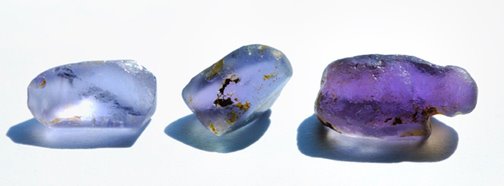
As tourmaline aficianados know, there are few truly rare colors of tourmaline. A pure yellow without a stong green secondary hue is quite rare and I have never seen a true violet but until recently, purple was the one spectral color that absolutely did not exist in tourmaline. Yes we had purplish reds but until last year when the Alta Lighona tourmalines from Mozambique entered the market, never a stone with a purple primary hue. (pictured above: 15.5 carat purple Mozambique cuprian tourmaline courtesy Pala International)

In early 1989 when the first curpian tourmalines from Paraiba appeared in the market in Brazil some were sold unheated. Most of these stones were a dark toned greenish “sapphire” blue, a “Thai sapphire blue” to be precise. In those days, blue was the most expensive, elusive and sought after color in tourmaline. Rumors whispered of a pure blue gem that was reputed to rival the finest in Burmese sapphire. This was the holy grail of tourmaline. I recall holding on to one parcel of natural dark blue Pariaba for several years before I burned them just in case the demand for the medium electric blue proved to be a passing fancy. Well, as we know it did not and when I finally did heat it, the result was a half dozen pure medium toned visually pure Carrribean blue gems that I sold at a substantial profit.

Since that time I have seen many examples of blue tourmaline including the famous Manoel Mutuca (described by Proctor as “sapphire blue” see Gems & Gemology, Spring 1985, p.11)) and Santa Rosa material but none (at least so far) with a true pure blue hue. Blue tourmaline always has a distinct greenish secondary hue which becomes quite evident when it is compared stone to stone with fine sapphire. Blue tourmaline can be exceptionally beautiful but it looks like tourmaline not sapphire.


To burn or not to burn or "Do I feel lucky? Well, do ya punk?”


With the entry of Mozambique curprian tourmaline we have a dilemma similar to the situation with the early Brazilian curprian tourmaline namely that some of the unburned material has a rich pure purple hue that reminds one of Siberian amethyst or fine purple sapphire. The difference is that unlike the rather dull greenish blue unheated Paraiba, this stuff is beautiful,

The Mozambique purples have a hue that is rich and pure. So, to burn or not to burn, that is the question, according to both Gene Flanigan from Precision Gems and Josh Hall at Pala International, these deep purples are also the best candidates for the oven, they heat to a neon pure medium “Paraiba” blue.

Some dealers have chosen the obvious solution. If you want a pure purple but burnable stone they will charge the same price as for the neon blue.(pictured above: unheated cuprian rough from Mozambique). Pictured below is an exceptional 1.89 carat custom cut Carribean blue cuprian stone cut from the center piece of rough. After and before; the first image shows the cut stone before heating. The second image shows the stone after the heating process was completed. The stone, currently available for sale at www.rwwise.com was cut by Gene Flanigan a very talented lapidary artist from upstate New York. (Images courtesy Gene Flanigan: www.precisiongem.com)

Will purple tourmaline go the way of fine star sapphires that hardly exist anymore because they can be burned and faceted? I don't think so, some of the fine purples simply possess problematic inclusions that make them risky candidates for burning. I found an 8.19 carat oval, a lovely example of Mozambique purple on my last trip to Asia. This stone faces up clean but under magnification shows long growth tube inclusions and cannot be burned. It is out having its picture taken and will be posted in a later blog. Logically purple cuprian tourmaline will have a two track price structure. Stones with a high degree of clarity under the loupe will sell for prices that may be double that for stones with certain types of inclusions whether visible or not.

Bits and Pieces:

I get lots of emails. Don't think I'm not grateful. Every once in a while a real interesting one comes through the mailbox. take this on:

Position Available:

Dear Mr Wise,
We are Stargate, diamond trading division of Ebenhaezer Bank Consulting Group of Belgium, operating in thirty countries worldwide. We have read your blog regarding the appraisal of stones by qualified experts. We have constant need of qualified gemologists, expert in assessing ROUGH DIAMONDS, and have great difficulty identifying where they can be located.
We offer good working conditions, contracts, and a fair remuneration.
A special need has arisen in Bangui, Central African Republic, where we are currently (this week) accepting a large consignment. We require the services of a qualified gemologist, expert in rough diamonds, to assist our team there.
Would you be kind enough to assist us at your earliest convenience?

Yours sincerely,
Lucilla Arioti
Global Client Relationship Manager, EMEA
Stargate,
a division of Ebenhaezer Bank Consulting Group
Telephone: London +44 207 870 5389

I am not familiar with Stargate but believe the lady is serious. She even called and left a message on my machine. So if you are a gemologist in search of adventure give Lucilla a jingle. This time next month you could looking at sparklies and sipping pina colodas in beautiful downtown Bengui. As for myself I'd love to go along but I can't give up my day job but when you get there be sure to drop me a line and oh do
be sure to take along a flack jacket.

New Site with excellent online library of inclusions:

Got an email from a French gemologist:
Marie-France Boursier-Brard. Ms Boursier-Brard has developed an excellent site with online images of inclusions. The site is quite comprehensive and well organized. Just click on: www.gemmes-inclusions.com


Check out my book Secrets of The Gem Trade; The Connoisseurs guide To Precious Gemstones: www.secretsofthegemtrade.com.


Now at 30% off just $27.95

"This book takes a much-needed sledgehammer to the industry's conventional wisdom about what makes a gemstone precious, and in the process builds a solid foundation for anyone who wants to understand the true beauty and value of gemstones."

Morgan Beard
Editor-in-Chief Colored Stone Magazine


Wednesday, September 20, 2006

Mozambique Cuprian Tourmaline: Part II; Beyond the hype

Dateline: Hong Kong

Arrived in Hong Kong Monday night locked, loaded and ready to expose this Mozambique Cuprian tourmaline for the over-hyped fraud I thought it was and got a surprise. Quick answer to the burning question of the day; yes, there are some Mozambique stones that will stand up to the finest from Brazil.

Recently I have seen quite a bit of the stuff and found some of the asking prices bordered on the ridiculous. Examined one 7+ carat green tourmaline that looked like, well a medium dark yellowish green tourmaline, nothing special but the price. If it had been offered to me for $100 per carat I would have sent it back but it was Cuprian so the wholesale asking price was $3,500 per carat. (see part I, super star stone or overripe hype)

A lot of the Mozambique material out there simply does not make the grade. Yes you can find Caribbean aka neon-blue, aka windex-blue that is, a visually pure light/medium toned blue that is of the same hue as Paraiba but read the book www.secretsofthegemtrade.com; color divides into hue, saturation and tone with Paraiba and all its wannabes it is all about the saturation baby. Much of this material has a subtle gray mask, so subtle that you can’t actually see the gray; you just get the impression of cool and dull. This can be difficult to detect because blue is, generally speaking, a cool color. For collectors who depend upon laboratory reports rather than their eye to make a buying decision that can be particularly vexing but “buying the cert” has always been a snare and a delusion. So, if you need a certificate to tell you whether the stone is beautiful I suggest a new hobby.

How good is the best Mozambique compared to the Paraiba paradigm? On a scale of 1-10, the best of the Mozambique achieves a solid 8.5-9.0. I saw two stones that were 9+. So, is Mozambique over priced? The best, definately not but the common sort of pale material with current asking prices of several thousand dollars a carat is best avoided. Those who hope to ride on the coattails of a legend will be disapointed. Stones of this description are destined to fall from four figures to three.

Judging by Hong Kong, the price structure for very fine Mozambique Cuprian tourmaline is very much in place with little variation from dealer to dealer but overall the prices are half or less than you would expect to pay for comparable Brazilian gems.

Coming Up:

Big Price Increases in Fine quality untreated ruby and sapphire, are they for real?

Some experts are claiming 100% price increases in untreated fine quality ruby and sapphire. What’s the word from the Hong Kong Show? Stay tuned.

Tuesday, July 04, 2006

Cuprian Tourmaline from Mozambique; Super-star-stone or just Over-ripe-hype?


By Richard W. Wise, G.G.

©2006


A recent fi
nd of cuprian(copper colored) tourmaline from Mozambique is making a lot of waves among gemstone dealers and collectors..

Reportedly these gems come from an alluvial deposit near Mozambique's Alto Ligonha. Region. One source tells me that the water born material is essentially mined out a statement that should always be viewed skeptically. The source of these river pebbles is yet to be found. This same source suggests that the entire production may be less than 50 kilograms of rough stones.

Is Mozambique the new Paraiba?

Much of the material cuts eye clean gems. Unlike the original material from the now famous São José da Batalha mine in the Brazilian state of Paraiba and two similar Brazilian locations which yielded mostly visually included smaller gems, the Mozambique cuprian is larger and a number of eye-clean 20-60 carat stones have been cut.

The color is said to be a more uniformly "aquamarine blue" than gems from the Brazilian find which featured a color range of green, blue-ish-green to blue. The blue color, usually described as
Caribbean or Windex blue is dominant and the hue is described as "watery" meaning that the gems lack the supercharged saturation of the finest Paraiba stones. This is particularly true in cut gems in smaller sizes (under 5 carats). Larger size gems seem to hold the color better and appear to have saturation closer to their Brazilian counterparts. I have not seen enough of the stones to make a definitive statement but what I have seen is quite beautiful though paler in saturation than the best of Brazil. One dealer suggested to me that the blue-green material was far more beautiful.

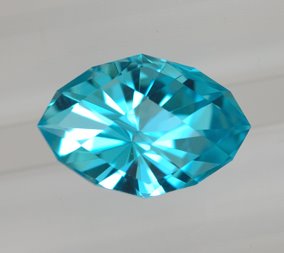
Image: Looking pretty super, this 13.42 carat oval is a highly saturated light-medium tone green-blue hue from
Mozambique

Prices:

Partisans of the new material from
Mozambique are touting it as "Paraiba tourmaline" and asking very aggressive prices. Several sources stated that dealers who are members of the American Gem Trade Association (AGTA) and have purchased significant amounts of rough material pressured the Gem Lab Standards Committee (GILC) for changes in terminology that would annoint these stones "Paraiba" on certificates issued by the AGTA Gem Lab. (see Pricing the crème, Part III). To be fair, CIBJO, the international committee that establishes terminology standards (bet you didn't know there was such a thing) in its 2005 Blue Book has recognized "Paraiba Tourmaline" as an acceptable trade name for cuprian tourmaline regardless of the source.

To Buy or not to buy, that is the dilemma:

The beginning is usually the best time to buy. Why?, because even a small strike can produce an initial flood of gemstones that overwhelms the market causing prices to fall. In a market of limited size such as the colored gem market, the discovery of a new gem variety or a known gem from a new source sparks interest and as interest grows demand increases. At the same time supply declines resulting in increasingly higher prices. We have seen this cycle repeat itself time and time again: Paraiba tourmaline, Spessartite Garnet, Demantoid Garnet are just a few examples of new gem strikes that are going through this sort of market cycle.

However, in the case, Mozambique cuprian tourmaline is being hyped as the "new Paraiba" and asking prices have started out very high despite the fact that the much of the new material does not measure up to the hype. As one source put it, on a scale of 1-10 where the best of the Paraiba Tourmaline would be a 8-10, the
Mozambique tourmalines are between 3-6.

With the rise of the shopping channels, gem marketing has entered a new era. During the past decade we have seen a consolidation in an industry previously dominated by wildcatters, small dealers with a limited stake and an even more limited budget. The shopping channels have become economic jugernauts. Selling directly to consumers, with millions in sales and huge numbers of viewers they have begun to control the market. Jewelry Television (ACN) which advertises itself as the world's largest retailer of loose gemstones, grossed over 300 million dollars last year. Witness the recent hype over Andesine (red sunstone) which the shopping channels are also calling “the new Paraiba”. In addition, we see a few big time dealers who watched the Paraiba phenomenon are holding large inventories of Mozambique rough and are determined to pump up the market and cash in big. Today, both these factors are at work and this has resulted in a distorted and overheated market.

My Advice:

If you are going to buy, buy high quality and buy big sizes. Larger stones are reported to "approach" the quality of the original find and if it looks like a duck… Stones from the original Paraiba mines are extremely rare over 5 carats and barely exist over 10. Otherwise, wait for the hype to die down! Market realities will eventually assert themselves and force prices into line with the relative quality of the gem on offer.

P.S. Cuprian vs. cuprite, whats in a name: My readers may have noticed a change in terminology from cuprite to cuprian this is the result of a gentle reminder from one of my faithful readers John S. White former Curator of the Smithsonian Mineral Collection: "Please, enough with this "cuprite tourmaline." Why do you continue to perpetuate what is unarguably the worst name that anyone has applied to Paraiba-like tourmaline? Cuprite is a distinct mineral species, it does not occur within or around gem tourmaline anywhere in the world. Furthermore, making the appellation even more ludicrous, cuprite is red, it is not blue nor green. You would be doing the gem world a favor if you would disavow your usage of this term while perhaps citing several of the others that have a far greater chance of being adopted." Thanks John!